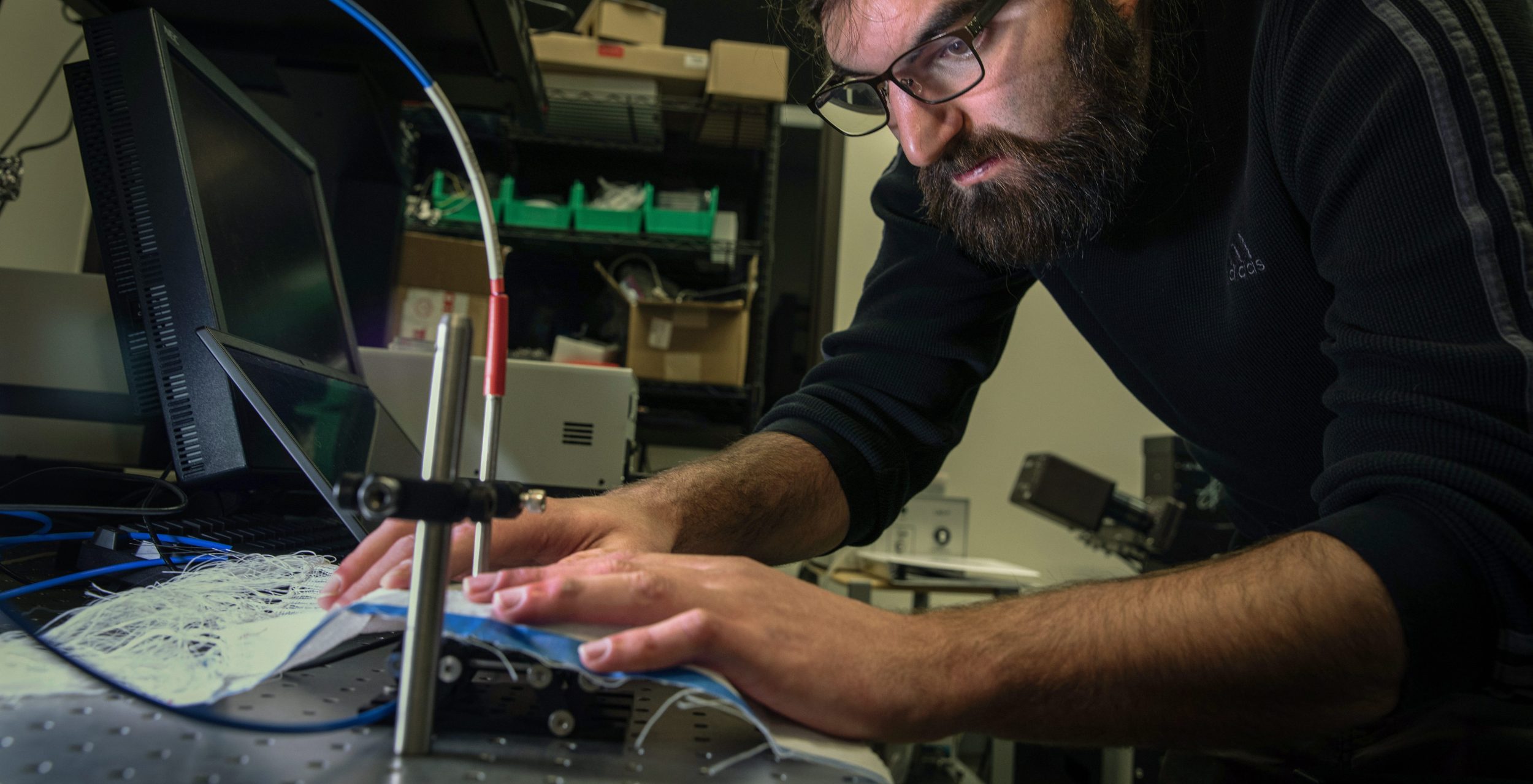
Embedded, Bio-based Fiber Barcodes for Enhanced Textile Sortation
Project Snapshot
| Activity Lead: | David Harper |
| Lead Institute: | |
| Partners: | |
| Tags: | Smart Textiles , Circular Textiles |
Research Goal
Create scannable fibers from natural feedstocks that link to information on the material or product in which it is embedded.
Project Description
Develop bio-based fiber barcodes with a unique fingerprint that is directly integrated into textiles and apparel items, and can be scanned to quickly access critical information (material content, manufacturing origin, etc.).
Impact
This addresses the bottleneck that sortation has become to the circular textile economy, helping with rapid identification for resale, repair, and recycling as well as increasing transparency within the supply chain, with far reaching implications in areas such as brand protection, security, recycling/sorting, certifications, safety, and composting.
Project Progress
Project Outputs
Discover the tangible outcomes and impact of this project.
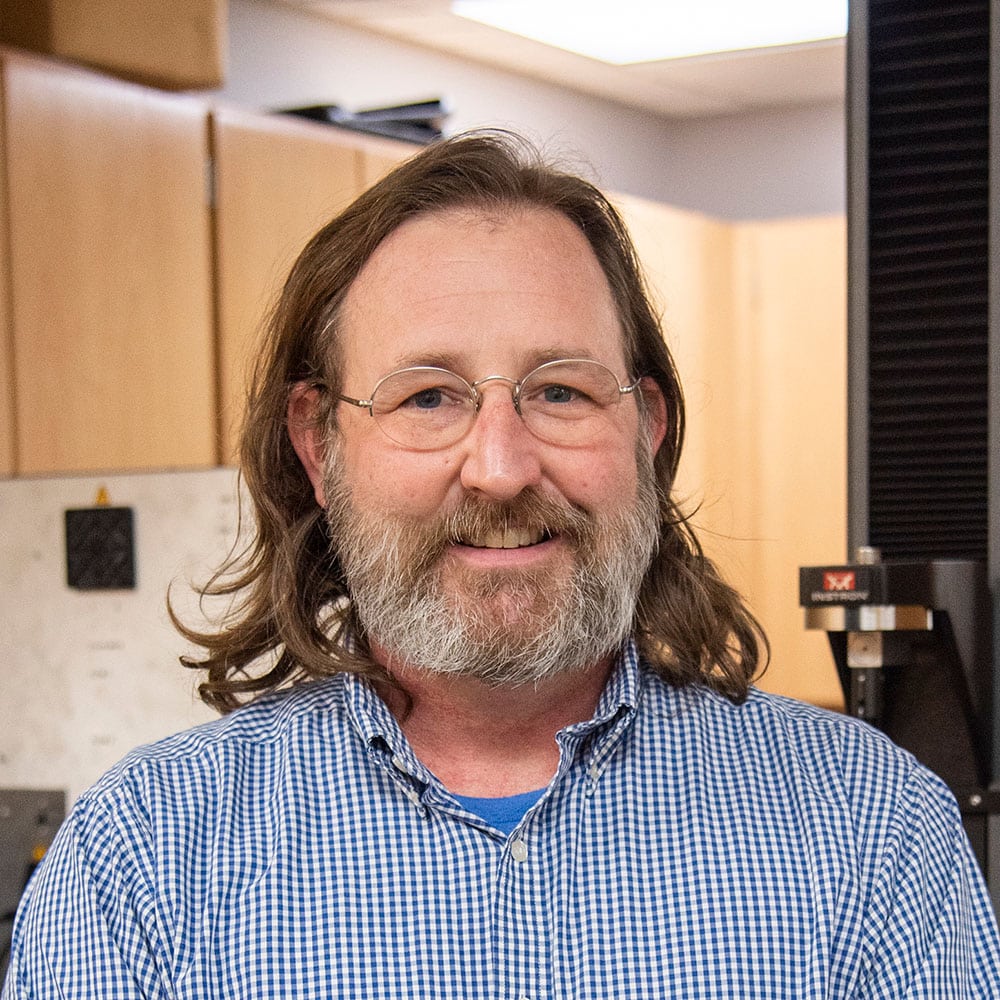
David Harper
University of Tennessee, Knoxville
Professor of Biobased Composites and Materials, University of Tennessee, Knoxville
David Harper’s research focuses on a question often overlooked in materials science: what happens at the end of a material’s life? As Professor of Biobased Composites and Materials at the University of Tennessee, Knoxville, he works across the full material lifecycle. His research develops high-value products from renewable, plant-based sources while engineering end-of-life and recycling solutions for composite and polymer materials.
His group applies this approach to challenges across transportation, built infrastructure, energy storage, CO2 capture, adhesion, and biomaterials, where material choices and end-of-life outcomes carry long-term environmental and performance implications.
He joined UT’s Department of Forestry, Wildlife, and Fisheries after postdoctoral work in the Composite Materials Group at the USDA Forest Service Forest Products Laboratory in Madison, Wisconsin. Harper brings more than two decades of experience leading research teams across industry, government, and academic partners, working across both applied and fundamental research. He is widely recognized for his work in biobased materials and renewable carbon.
Education
- Doctor of Philosophy (PhD), Civil Engineering, Washington State University, 2003
- Master of Science (MS), Civil Engineering, Washington State University, 1998
- Bachelor of Arts (BA), Physics, West Virginia University, 1995


